Leave Only Footprints

Archived from Mar 23, 2023:
Because so much of the world we live in is about consumption, both material and immaterial, I have a feeling a lot of these are going to start with “I saw a tweet/post/video that got me thinking.” I will try to avoid being repetitive but at the end of the day, sometimes it’s a good prompt.
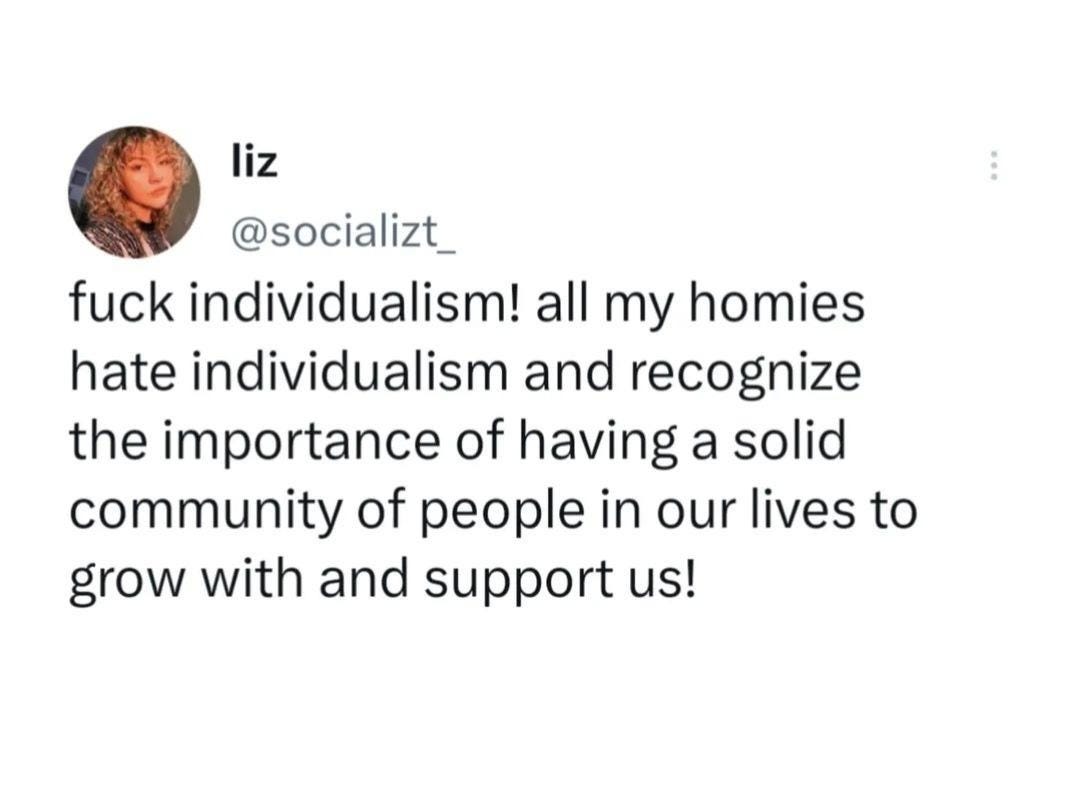
Anyway, I saw this tweet:

Now, this is by no means a new observation. Criticism of large systems, and even small ones, has been happening since time immemorial but in our distinctly integrated time, we’re suddenly aware of every criticism and every system. I like this tweet because it is so succinct in what many of these theories ultimately say. This sentiment, in combination with the general feeling a lot of people have around things like carrying reusable bags while celebrities own yachts and full fleets of cars, I got thinking about the notion of “personal responsibility”. For the most part, and I realise this is said from the inside of my own little media bubble, it seems like people are pretty disillusioned with the ideas of personal action as a meaningful solution to the vast, systemic failures we are experiencing on so many fronts. But the personal responsibility line is particularly hackneyed in the realm of environmentalism. I do my best to bring reusable bags and coffee thermos’, and honestly feel an inordinate amount of guilt when I find I haven’t brought a tote with me to the shop. When I run a bath, when I dump out pasta water, when I unwrap a cucumber from it’s thin, useless plastic packaging, when I sometimes throw out the last quarter of the cucumber that made it’s way to the back of the fridge and became limp and resignedly wonder if putting it in the compost makes any real difference, are my compost bags even compostable or is it convenient terminology and packaging. In short, I have a very normal, midday, Mini Spiral™. There’s a disconnect from the reality and the feeling, a deep seated sense of failure with a cognitive acknowledgement that I don’t even own a car, let alone something like a yacht or private jet. While I know no experience is truly universal, I do feel like for the most part, average folks can’t help but sometimes think that our cotton tote bags and bamboo toothbrushes aren’t making nearly as much impact as corporations spending millions on marketing want us to think.
So if the “personal responsibility” line is increasingly lost on the general public, who is it really for? In a wholly unfounded line of thought, I can’t help but wonder if it’s not only by, but also for those with the means to actually make a difference. By which I mean, I wonder if this line of thinking is not only meant to placate the people with relatively little power, but perhaps even more so to assuage the guilt of those who should very much be feeling that guilt; assuring themselves that they’re doing their best for the environment because they’ve told their chefs to not use plastic wrap while they step off a 40 minute flight on a private jet. Now, I’m sure it’s not the whole picture, but it seems to become more and more apparent when there are no meaningful consequences for cutting down ancient forests, spilling oil and derailing trains full of toxic chemicals in the middle of communities. It’s hard to feel like these corporations are talking to anyone but themselves; patting themselves on the back for damage control PR rather than making any attempt to stop the harm from being caused in the first place.
If you’ll allow me to explore this line of thinking just a bit more, I think on the opposite end of the scale, while maybe not intentional, the emphasis on personal responsibility can even teeter into cruelty and more materialism. First, “green” options are not accessible to large swaths of people. Whether it be prohibitively expensive green and organic options, or people who find themselves living in food desserts (remember when solving that problem wasn’t a conspiracy theory?). Also, to be able to perpetually make the most ethical choice, in every situation would frankly amount to a full time job, given the amount of research it would take.
Second, there’s also the commodification of products that are supposed to be reusable. Water bottles are such an interesting example of this. I couldn’t tell you what brand mine is, I just know it’s green and several years old. I cannot imagine why I would need another one and yet I have one, courtesy of my employer giving me one, without checking how many of their 500+ employees might actually need or want one. I wonder how many are covered in dust. It also feels like every month there’s a new water bottle all over my feed. Nalgene, Stanley, Yeti. They all hold water, right? It’s fine to want something you enjoy using, but if that enjoyment is changing every six months and coincidentally aligns with whatever is “the” consumable of the moment, I don’t think it’s terribly hard to extrapolate where the appeal probably comes from; not the object or its’ function, but the connotation, the status, the trend. It’s potential to be reusable is not only in it’s design, but in the times you actually use it. Funny, that.
I ask your forgiveness, I’m being an a huge buzzkill (as is my custom). I want to be clear, though I am frequently wracked with inordinate amounts of guilt, I am not hopeless. While I struggle to see individual choices making enough of an impact to balance out the massive damage carelessly done by colossal companies, I do see the power in communities demanding better for themselves, holding the powerful to account in any way possible and knowing we can serve one another better than any board of directors ever could. In short:
We’re all in this together, and I love you for being here. Thank you.
And of course, only if you want to, if you enjoyed, please feel free to share.